 Paid Media
SEO vs Google Ads for growing brands
Search intent and social interruption solve different problems. Budget should not treat them as rivals.
 In short
The distinction that matters
Paid search is a switch. Turn it on and qualified traffic arrives at a known price; turn it off and it stops the same day. Organic search is an asset. It takes months to build and then delivers traffic at a marginal cost close to zero.
Brands that argue about which is better are usually asking the wrong question. The right one is which constraint you are under — time or cost.
How we split budget in practice
Hashtag uses the same three-stage split on most accounts.
- 01Months 1 to 3 — paid search carries lead volume while technical and on-page fixes ship.
- 02Months 4 to 9 — content published against real query data; paid budget narrows to the highest-intent terms.
- 03Months 10 onward — organic covers the informational demand, paid covers competitive and commercial terms only.
Where both campaigns leak
The most common cause of poor performance is not the channel. It is the destination. A campaign pointed at a homepage asks the visitor to do the qualification work themselves, and most will not.
Every keyword group deserves a page that answers its query directly, in its own language, with one visible next step.
Search Console query mix versus paid spend, six months
Original client data, published only with approval.
Related to paid media.
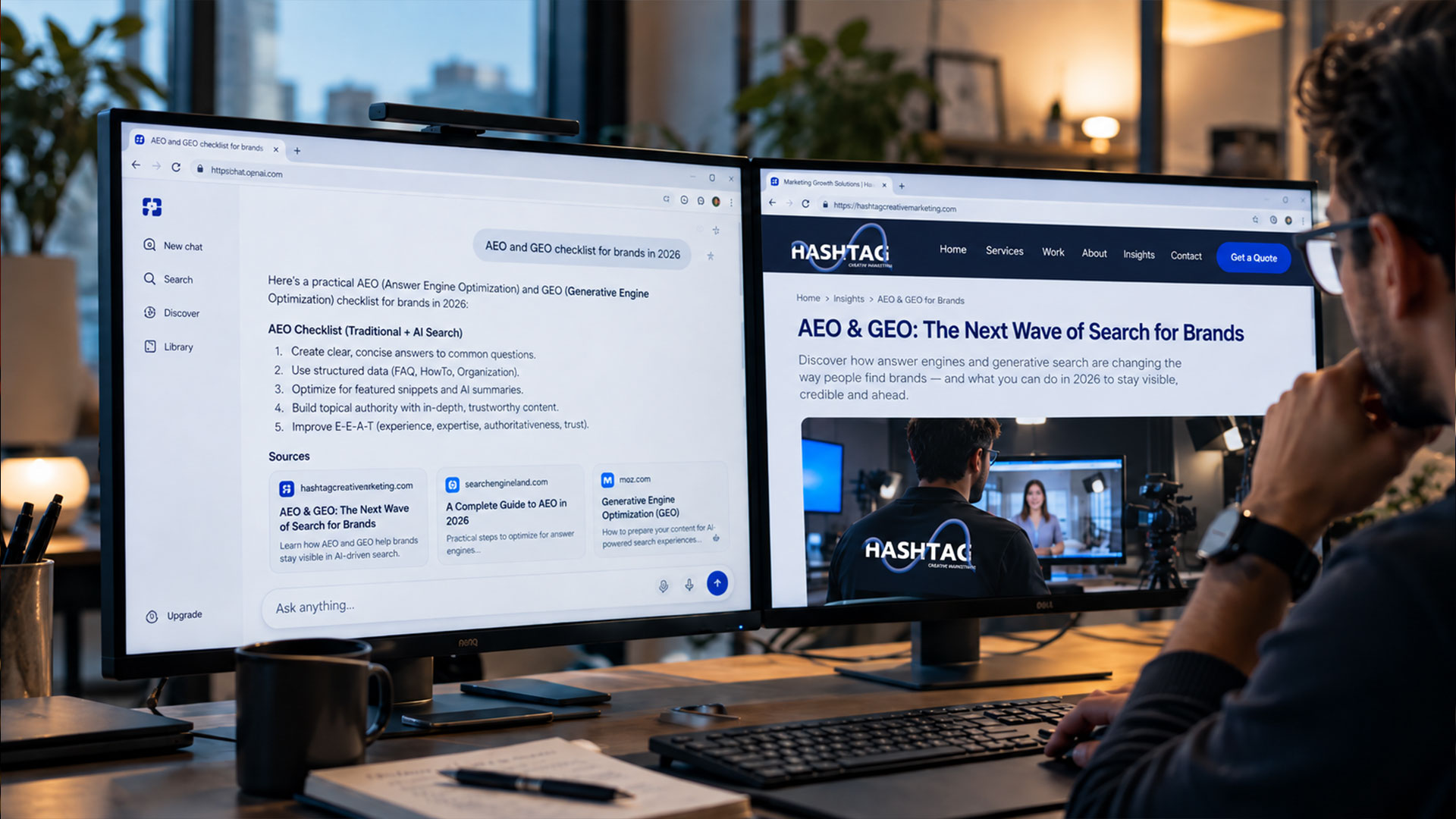

Put budget behind the work that already performs.
Media buying, budget optimisation, landing-page integration and lead tracking.